
Offshore Energy Engineering Prices and Costs
Offshore Wind Farm Decommissioning: Removal Options and Cost Drivers
Offshore wind farm decommissioning starts with an asset-specific removal strategy: establish what must be taken away, what alternative treatment could be permitted, and whether the selected methods can be delivered with available vessels, ports and disposal routes. A full-removal scope is not simply installation in reverse. Corrosion, marine growth, buried components, changed seabed levels and uncertain records can alter lifting loads and make original connection details difficult to access.
Cost estimates become useful when they connect each removal option to its offshore sequence, required surveys, environmental controls and onshore destination. The lowest offshore cutting cost, for example, can lead to higher spending later if the recovered section cannot be transported or processed at the receiving port.
Set the removal boundary before choosing equipment
The baseline scope should identify turbines, towers, foundations, scour protection, inter-array and export cables, offshore substations and associated equipment. For each asset, distinguish the visible structure from components below the seabed, within rock protection or inside a foundation. Record ownership and interfaces where infrastructure is shared or remains in service.
Full removal generally aims to recover the infrastructure within the approved scope, including specified buried elements. Partial removal leaves defined material in place, such as a foundation section below an approved seabed level or a cable section that cannot be recovered without disproportionate disturbance. Leaving an asset in place, or repurposing part of it, is a separate option that requires a clear legal and technical basis; neither should be assumed acceptable because it reduces vessel time.
Approval conditions differ by jurisdiction, site and asset. The relevant authority may require a comparative assessment of environmental effects, navigation and fishing interests, technical feasibility, safety and long-term liabilities. A permitted end state should be described in measurable terms: the area covered, remaining material, required cut elevation or burial condition, verification method and any continuing monitoring obligations. A seabed cut level stated without a survey datum or allowance for mobile sediment is open to conflicting interpretations.
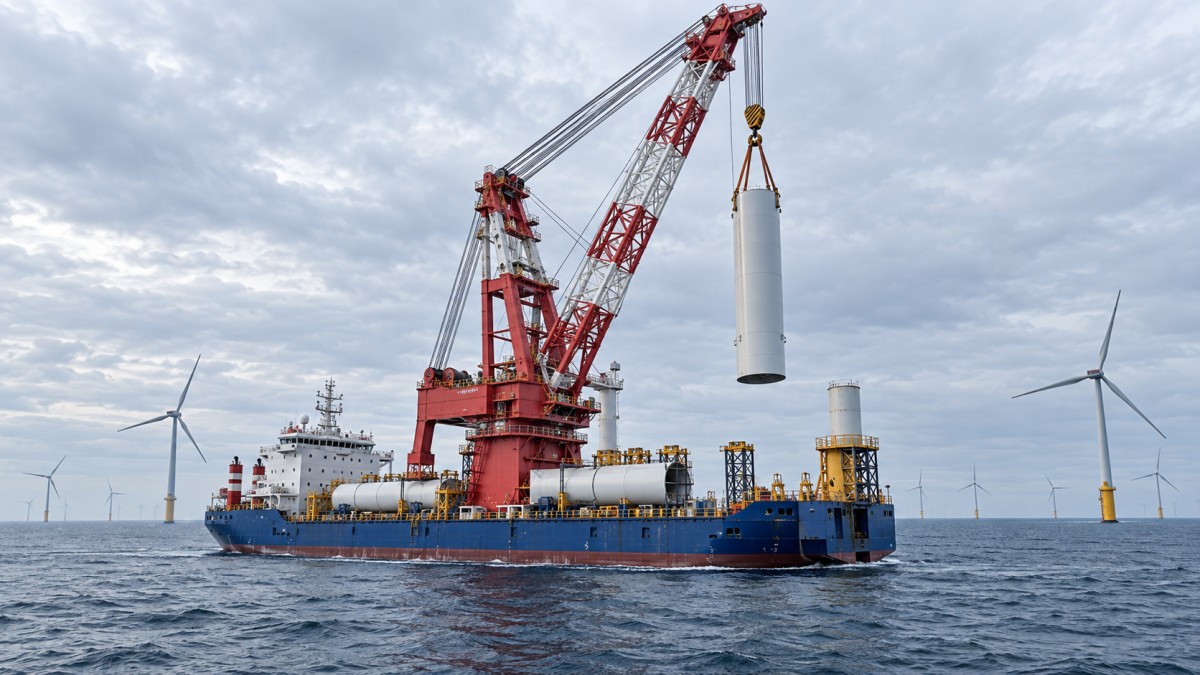
Foundation removal changes the offshore sequence
Foundation type is a major determinant of the removal method. A monopile may be cut below the seabed and lifted as a section, while a jacket requires attention to several legs and their connections to piles. Gravity-based structures raise different questions about ballast removal, suction, seabed bearing and the lift or transport arrangement. Floating systems add mooring lines, anchors and dynamic cables to the scope; recovering the floating unit does not automatically resolve the seabed assets.
Monopiles and piled jackets
Internal cutting can reduce the need to excavate around a pile, but only if tools can enter and operate at the required depth. Internal obstructions, grout, deformation, sediment or restricted access through the transition piece can prevent the planned setup. External cutting offers another route but may require excavation, diver or remotely operated vehicle support, and control of suspended sediment. The cutting method must also account for a secure lift before the final connection is severed.
Extraction of an entire pile avoids leaving a lower section, but requires a credible assessment of soil resistance, extraction loads, foundation condition and equipment capacity. A method suitable for one pile diameter or soil profile should not be assumed suitable across the array. If extraction stalls, the contingency may involve cutting, additional vessel time and a revised disposal plan. That fallback needs compatible equipment and an accepted end state before the campaign begins.
For jackets, the lift plan should consider load redistribution as legs are released. A structure that appears symmetrical in design drawings may have uneven marine growth, damaged members or trapped water. Cutting several attachments in the wrong order can leave an unstable structure or transfer unexpected loads to the remaining connections. Temporary restraint, cut sequence and recovery of detached sections belong in the same engineering package.
Scour protection and seabed material
Rock placed around a foundation can obstruct access to an external cutting location or bury small components. Removing it adds handling and disposal scope and disturbs the seabed; leaving it requires an accepted assessment of the final condition. The decision should distinguish installed rock from material that has moved since construction. Pre-removal surveys are also needed after cutting and recovery, because the vessel footprint, excavation and dropped objects can change the area that must be verified.
Cable recovery is a route-specific decision
Inter-array and export cables should be assessed by section, not only by total length. Burial depth, crossings, rock placement, exposure, seabed mobility and proximity to operating assets determine whether a section can be recovered safely and what equipment is needed. A cable buried in soft sediment presents a different recovery problem from one constrained beneath rock or crossing another live cable.
Before cutting, the electrical isolation and testing plan must establish that the relevant circuit is de-energized and identify all connected equipment. Recovery then requires a workable means of locating, exposing, cutting and securing the cable end. Pulling from a vessel can disturb a wider corridor than expected if the cable snags, breaks or deviates from its recorded route. A broken end may require a new search and intervention, particularly where as-built burial data no longer represent present conditions.
Where removal would create greater disturbance or threaten adjacent infrastructure, leaving a section in place may be assessed as an alternative if local requirements allow it. That assessment should address future exposure, interaction with fishing or anchoring, the location and treatment of cut ends, and who retains responsibility. Cable protection measures deserve separate treatment: recovering the cable while leaving rock, mattresses or other protective material is a different end state from removing the entire installation.
Recovered cable also has a practical onshore constraint. Cable construction, contamination, saltwater and attached protection affect handling and recycling routes. A recovery vessel needs enough suitable deck or carousel capacity, but the receiving facility must also accept the cable in its delivered form. Offshore cutting lengths should reflect both limitations.
Compare vessels against the complete duty
Headline crane capacity is an incomplete basis for vessel selection. The lift must fit the load chart at the working radius, with allowances for rigging, dynamic effects and the actual mass of the recovered item. The task also includes access, positioning, cutting support, deck layout, sea fastening and safe transfer to shore. A vessel able to lift a nacelle may not be the most efficient choice for a campaign dominated by small subsea cuts and repeated recovery trips.
Jack-up vessels require suitable seabed and leg penetration assessments, as well as clearance from cables, foundations and scour protection. Floating heavy-lift vessels face different station-keeping and motion limits. Water depth, current, wave conditions and proximity to remaining structures affect both choices. The relevant weather limit is the most restrictive limit across the operation, which may be access or cutting rather than the lift itself.
Transit and deck capacity influence the number of offshore cycles. Large recovered sections reduce offshore cutting but consume deck space and can require specialist transport and quayside lifting. Smaller sections may improve stowage while increasing offshore cuts, handling events and exposure time. The economic comparison should include the entire cycle from preparation through delivery at the processing site.
Port and waste routes can govern the method
A port suitable for installation is not automatically suitable for decommissioning. Recovered components arrive with uncertain condition, marine growth, residual fluids and potentially damaged lifting points. Quay bearing capacity, water depth, crane reach, storage area and transport access determine whether sections can be landed and moved without additional offshore processing.
The waste plan should identify material streams and acceptance requirements before vessel contracting. Steel, electrical equipment, cable, lubricants, composite blades and contaminated materials require different handling routes. Blade treatment deserves particular attention because a practical route depends on local processing capacity, transport dimensions and the condition of the material. A recycling destination stated at a high level is not equivalent to confirmed capacity for the expected volume and delivery schedule.
Document the custody of recovered material from offshore transfer through weighing, classification, treatment and final destination. If a facility rejects a load because contamination or dimensions differ from the agreed description, the resulting storage and rehandling can delay vessel turnaround. Sampling and characterization reduce that uncertainty, although final condition remains subject to verification when components are exposed.
Build the estimate around time, interfaces and uncertainty
A useful estimate separates fixed preparation costs from activity-dependent offshore costs. Engineering, surveys, permits and mobilization can remain substantial even when the number of assets is small. Vessel spread costs then depend on campaign duration, transit, weather interruptions, equipment reliability and the rate at which components can be landed. Onshore processing, environmental verification and post-removal obligations should sit within the same estimate boundary.
Weather exposure should be modelled for each critical task and season, using the relevant operating limits and a stated metocean data period. Applying one generic downtime allowance to every activity can conceal the effect of a short, restrictive cutting window or a multi-day lift sequence that cannot be interrupted safely. Include setup and securing time when assessing whether a forecast window is usable.
Commercial interfaces also change cost. A vessel waiting for a quay, a cutting subcontractor waiting for isolation, or a port receiving material faster than it can process it can each interrupt the critical path. Contract schedules should define readiness, custody, performance assumptions and the treatment of delays. Reserve capacity or a fallback route has a price, but leaving it undefined transfers uncertainty into the execution phase.
Use scenarios for the uncertainties that change the method, rather than applying a single unexplained contingency to the whole project. Examples include a foundation that cannot be extracted, a cable section that breaks during recovery, or a contaminated component requiring a different disposal route. For each scenario, identify the trigger, extra equipment, time effect and whether the alternative end state would need further approval. Avoid adding every adverse outcome together without examining whether they can occur concurrently.
Sequence evidence around decision gates
Early records review should establish what was installed and which assets remain operational. Geophysical and engineering surveys then test the assumptions that determine removal feasibility: current seabed levels, exposed or buried cables, structural condition, access restrictions and potential obstructions. Resolve discrepancies between as-built records and survey results before finalizing cut locations and vessel positioning.
Develop the preferred sequence alongside at least one credible contingency for high-consequence work. Confirm the end-state requirements, lift and cutting interfaces, receiving port, waste acceptance and verification survey scope before committing to the offshore campaign. Final closeout should compare the actual condition with the approved end state and record any remaining material, its location and the party responsible for subsequent obligations.
Tag
Recommended for You
{item.title}
News Categories
Leave Us a Message