
Offshore Energy Engineering Prices and Costs
Offshore Wind Farm Construction Costs: Foundations, Vessels and Cables
Offshore wind farm construction costs depend on more than turbine prices. Foundation design, installation vessel availability and subsea cable requirements can reshape budgets as water depth, seabed conditions and project schedules change. A competitive equipment price does not necessarily produce a competitive installed cost: an underestimated seabed constraint or a missed vessel slot can add expenditure across several contracts at once.
A credible construction budget therefore needs more than separate allowances for foundations, vessels and cables. It needs a consistent installation plan, clear contract boundaries and a contingency that reflects the maturity of the design and the consequences of delay. The central approval question is not simply whether each quoted price is reasonable, but whether the combined budget will deliver the intended capacity within the assumed schedule.
Define what the construction budget includes
Cost comparisons become unreliable when project boundaries differ. One estimate may include foundation fabrication but exclude installation; another may combine supply, transport and offshore work. Cable estimates can exclude burial, landfall works, protection, testing or repairs. Vessel costs may sit inside a contractor’s installation price or appear as a separate charter and marine spread allowance.
Before comparing offers, establish a common scope and identify who carries each interface. For the three construction packages, the budget should distinguish:
- Foundations: surveys and design, fabrication, corrosion protection, secondary steel, transport, installation and inspection.
- Vessels: charter or contractor rates, mobilization and demobilization, crew, fuel, port services, installation equipment and standby provisions.
- Cables: cable manufacture, accessories, route preparation, loadout, laying, burial or protection, termination, testing and remedial work.
These are not the entire project budget. Turbines, substations, grid connection, development expenditure, insurance, financing and owner’s costs may be material, but their treatment should be explicit rather than assumed. In particular, distinguish the offshore export cable from the onshore connection and any transmission assets assigned to a separate party.
Record the price basis for each estimate: currency, reference date, applicable taxes, freight assumptions, escalation, exchange-rate exposure and whether prices are firm or indicative. A cost per installed megawatt can be useful for screening, but it conceals differences in water depth, export distance, foundation count and scope. It should not substitute for a package-level estimate.
Foundations: the seabed determines more than steel weight
For fixed-bottom projects, foundation expenditure depends on structural loads, water depth, soil conditions and installation constraints. A monopile may be a suitable solution in one location, while a jacket or another arrangement is required elsewhere. The choice should be evaluated as a delivered and installed system, not as a comparison of fabrication prices alone.
Seabed investigations influence pile dimensions, penetration assumptions and installation method. Hard or variable ground can change the equipment needed, installation duration and risk of encountering refusal or other complications. Soft ground can affect foundation dimensions or drive additional engineering. If the design is based on incomplete geotechnical coverage, an attractive fabrication quote may leave the project exposed to later changes in steel quantities, installation methods and schedule.
Foundation size also connects directly to vessel and port costs. Larger components can reduce the number carried per voyage, require heavier lifting equipment or constrain storage and loadout. A design that is cheaper to manufacture may be more expensive to install if it increases trips offshore or narrows the range of suitable vessels.
Other items deserve explicit treatment. Scour protection, where required by the design, involves material supply and offshore placement. Noise mitigation measures may affect equipment, vessel time and permitted installation periods. Transition pieces, access systems and cable protection interfaces must be assigned to the relevant supply packages. These requirements depend on site design and consent conditions; they should not be added as universal percentages without checking the underlying scope.
Floating foundations require a different cost model. Mooring lines, anchors, assembly facilities, tow-out and hookup become central, while dynamic cable interfaces introduce additional complexity. Comparing a floating estimate with a fixed-bottom estimate on foundation supply price alone can hide major differences in marine operations and port requirements.
Vessel cost is a schedule exposure, not just a day rate
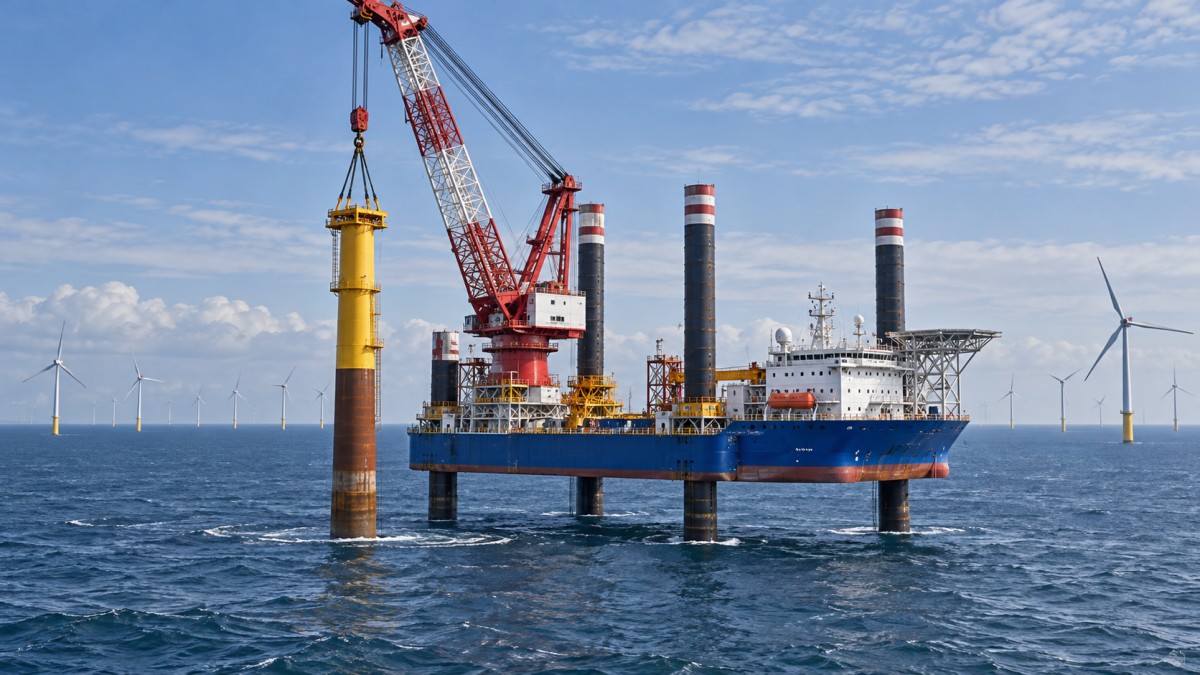
An installation vessel quote is only one part of the marine spread. Depending on the operation, the budget may also need to cover tugs, barges, support vessels, survey capability, specialist equipment, port calls and crews. Mobilization can be substantial, especially when a vessel must travel from another region or be fitted with project-specific equipment.
The relevant comparison is the expected cost of completing the work, including time and contractual exposure. A lower day rate can be outweighed by a longer installation campaign, fewer foundations carried per trip or stricter operating limits. Conversely, a more capable vessel only creates value if its lifting capacity, deck space and operating characteristics match the actual foundation design and port arrangements.
Weather affects this calculation through workable windows, not through an arbitrary number of “lost days.” Different operations have different limits: lifting a foundation, jacking a vessel, laying cable and performing subsea work do not necessarily stop or restart under the same conditions. The estimate should state the weather data period, seasonal assumptions, operating limits and time allowed for waiting and recovery. A single average utilization figure cannot explain how those assumptions translate into a construction schedule.
Contract terms determine who pays when the plan changes. A fixed-price installation contract can transfer some execution risk to the contractor, but exclusions, change provisions and relief events still matter. Under a day-rate arrangement, the project may retain greater exposure to duration and standby. In either case, review cancellation charges, minimum hire periods, vessel substitution rights and what happens if foundations, cables or port facilities are not ready at the agreed mobilization date.
Sequencing is particularly important. If foundations are delayed, a booked installation vessel may incur standby costs or lose its slot. A later slot can push subsequent cable work into a less favorable season. The budget should reflect this chain rather than assigning independent, unrelated contingencies to each package.
Cable expenditure extends from route preparation to testing
Inter-array cables connect turbines within the wind farm; export cables carry power toward shore or another grid connection point. Their costs depend on different route and capacity requirements, so a single cable allowance can obscure the exposure.
For both, the purchase price depends on the specified design and quantity, but the installed cost also depends on the route. Seabed conditions determine whether the planned burial depth is achievable and which installation tools are suitable. Crossings of existing infrastructure, areas where burial is impractical, and constrained landfall approaches can require additional engineering, protection or specialist installation work.
Route length should include the allowance required by the cable design and installation method, not simply the straight-line distance between endpoints. Accessories, joints, terminations and testing must be included where needed. For floating projects, the interface between dynamic and static cable sections requires particular attention because cable design, movement and installation arrangements are linked.
Burial is not interchangeable with protection. Where a cable cannot be buried as planned, alternative protection may involve material placement, additional vessel time and approvals. The estimate should make clear who bears the cost if actual seabed conditions prevent the specified burial method, and what evidence is required to accept the completed work.
Testing and repair arrangements also affect the financial exposure. A budget that assumes successful installation on the first attempt but excludes fault location, recovery or repair leaves a potentially material gap. That does not mean every project should budget for a full replacement cable as a base cost. It means the estimate should identify the responsible party, contractual remedies, insurance treatment and the time and resources needed if a fault occurs. Spare cable and repair access should be evaluated against those arrangements and the consequences of an extended outage.
Turn uncertainty into an approval-ready contingency
Contingency should respond to identified uncertainty rather than serve as an unexplained percentage added to the total. A useful risk register connects each major uncertainty to a cost mechanism, an owner and the status of the information needed to resolve it.
A scenario analysis is more informative than applying the same uplift to every package. For example, test a foundation delivery delay against the actual vessel contract: does it trigger standby, a cancellation charge or a missed installation window? Then carry the resulting schedule shift into cable installation and commissioning. Avoid adding the same delay cost twice if it is already included in a contractor’s price or an agreed remedy.
Separate contingency for construction cost uncertainty from financing costs associated with delay. A later completion date can affect interest during construction and the timing of revenue, but the magnitude depends on the financing structure, drawdown profile and contractual arrangements. Insurance proceeds or liquidated damages should not be treated as certain offsets without checking coverage, limits, exclusions and recoverability.
As design and procurement advance, the estimate should change with the evidence. An early budget based on conceptual design and indicative vessel rates has a different confidence level from one supported by completed surveys, defined interfaces and signed contracts. A lower contingency is justified by reduced exposure—not merely by the desire to meet a capital target.
What should be resolved before funds are committed?
The most consequential approval checks connect technical assumptions to contractual and financial consequences:
- Design maturity: Are foundation dimensions and cable specifications supported by sufficient site data, or are major quantities still provisional?
- Deliverability: Can the nominated vessels, port and installation equipment handle the actual component dimensions and proposed schedule?
- Scope completeness: Are transport, scour protection, cable crossings, landfall works, testing and demobilization included or expressly allocated elsewhere?
- Price exposure: Which amounts are fixed, and which remain subject to escalation, currency movements, remeasurement or later tender?
- Delay allocation: Who pays for standby, remobilization and missed windows when an upstream package is late?
- Residual risk: Which events remain with the project after contract remedies and insurance, and has their effect on both cost and completion date been assessed?
Where major uncertainties remain unresolved, staged approval can link further commitment to specific evidence: completion of a geotechnical campaign, confirmation of a cable route, a binding vessel reservation or reconciliation of package interfaces. The decision is not whether uncertainty can be eliminated. It is whether the remaining exposure is visible, funded and consistent with the construction plan being approved.
Tag
Recommended for You
{item.title}
News Categories
Leave Us a Message