Offshore Energy Engineering Prices and Costs
How water depth affects the cost of offshore wind farms
Greater water depth can raise the cost of offshore wind farms by requiring larger support structures, different installation vessels and longer or more weather-sensitive operations. Beyond the practical range of a fixed-bottom design, a floating system may change the cost structure again: less reliance on seabed-mounted towers is offset by platforms, moorings, anchors and dynamic cables. There is no universal depth at which one option becomes cheaper than another.
For an investment approval, the immediate question is not simply whether a site is deep. It is whether the proposed design, installation method and operating plan have been priced against the actual depth range, seabed, weather and port constraints. A low foundation quote can become expensive if it excludes specialist vessels, seabed preparation or the schedule risk of installing at the site.
Where depth enters the capital budget
Water depth affects the distance between the seabed and the turbine, the forces the support system must withstand, and the equipment needed to install it. The financial effect appears in several linked packages rather than in a single line item.
Foundation design and fabrication. A fixed-bottom structure must transfer turbine loads through a longer span as water depth increases. Depending on the design and site loads, this can require changes to dimensions, wall thickness, bracing or connection details. More steel is one possible outcome, but engineering, welding, inspection and fabrication capacity also affect the price. A deeper site with favorable soil is not automatically more expensive to build on than a shallower site with difficult ground.
Installation. The selected foundation must be transported, lifted, positioned and secured. Greater depth can restrict the vessels or installation equipment available for that work. For jack-up vessels, water depth is only one constraint: leg length, seabed penetration, air gap, crane capacity and environmental operating limits must also be checked. A suitable vessel may have a higher day rate, but availability and the number of workable days can matter just as much.
Electrical infrastructure. Water depth can increase the cable length needed between the seabed and a turbine or platform. Floating turbines introduce a moving connection, so sections of cable must be designed for repeated movement. Route length, burial conditions, protection requirements and landfall are separate cost drivers; depth should not be used as a substitute for a route assessment.
Schedule and financing. Longer offshore campaigns expose more work to potential weather interruptions and vessel scheduling conflicts. Delays can extend financing costs and postpone revenue, although their effect depends on the contract, financing arrangements and commissioning sequence. The budget should show these consequences separately from the direct cost of the offshore work.
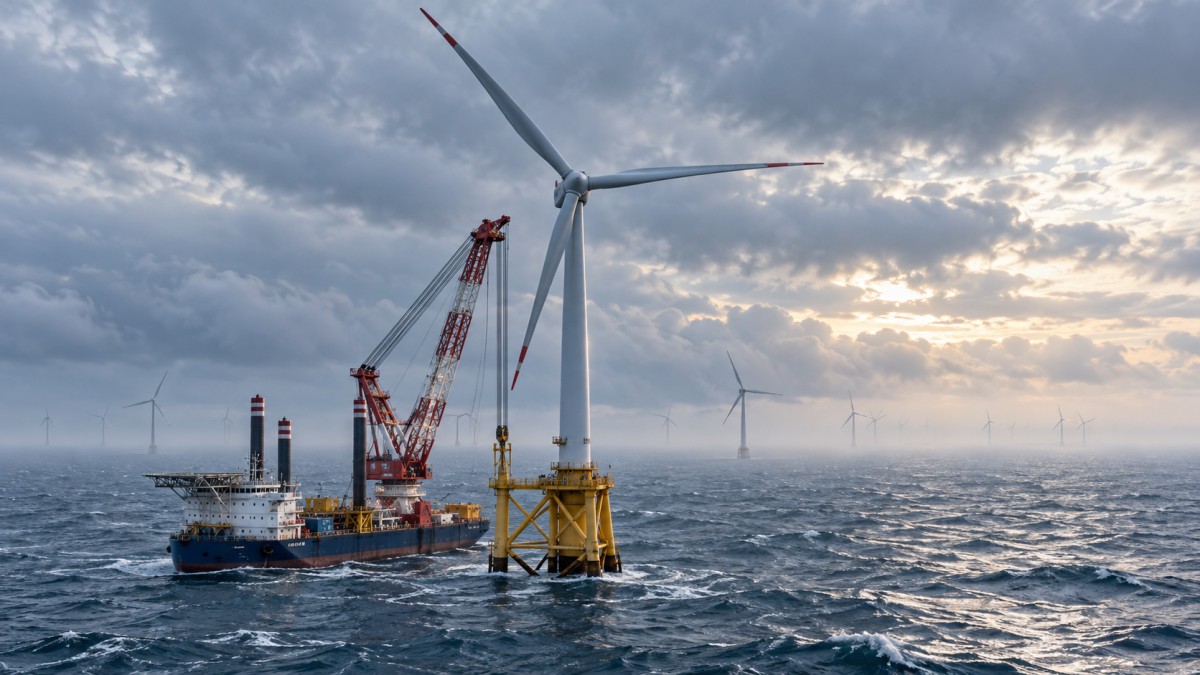
Fixed-bottom and floating: compare complete systems
Fixed-bottom foundations include several configurations, such as monopiles and jackets. Floating systems use buoyant platforms held in position by mooring lines and anchors. The distinction is commercially important, but depth bands alone are not a procurement specification. A design that is technically possible at a site may still be unattractive because of fabrication capacity, vessel constraints or ground conditions.
A floating design can shift some turbine assembly to port and reduce certain offshore lifting requirements, depending on the concept. It does not eliminate offshore work. Anchor installation, mooring connections, electrical hook-up and commissioning still need vessels, crews and suitable weather. Port water depth, quayside strength, storage area and tow-out clearance can also determine whether the intended installation sequence is feasible.
When comparing bids, ask each supplier to identify the full scope needed to deliver an operating turbine, including interfaces managed by others. A platform price without anchors, moorings, cable connections or port modifications should not be compared directly with a fixed-bottom foundation price that includes installation.
The site conditions that can outweigh depth
A depth figure is useful for screening, but it does not describe the engineering problem. The same nominal depth can produce different costs across a wind farm, particularly where the seabed slopes or ground conditions vary between turbine locations.
Ground conditions and seabed preparation
Soil strength, layering, rock, boulders and seabed mobility influence foundation and anchor selection. They can change pile penetration, drilling requirements, anchor installation methods and the need for scour protection. Insufficient site investigation leaves bidders to price uncertainty differently: one may include a conservative allowance, while another may exclude difficult ground altogether.
Before approving a contingency based mainly on depth, review the coverage and interpretation of geophysical and geotechnical surveys. Identify locations where the design relies on extrapolated ground conditions, and establish who pays if conditions differ from the contractual baseline. The cost of additional investigation should be compared with the exposure it could reduce, not treated as an automatic saving if omitted.
Weather windows and vessel productivity
Depth does not determine wave height or wind speed, but a deeper site may need a different vessel or operation with different weather limits. An installation estimate should connect the metocean data to the actual task: lifting, piling, towing, cable laying and personnel transfer can each have different operational thresholds.
Ask whether the schedule includes transit, positioning, setup, waiting on weather and recovery from interruptions. A productivity assumption expressed only as “foundations per day” can conceal these periods. Check the season covered by the analysis and whether downtime has been modeled consistently across the foundation, cable and commissioning campaigns. A vessel retained during delays may create cost even when no installation progress is made.
Distance is not depth
A deeper site may also be farther from shore, but the two are distinct variables. Distance can affect export cable length, transit time, crew logistics and the choice of service base. Keeping them separate in the cost model helps the approval team identify whether an increase is caused by the water column, the location or both. It also prevents a depth-related allowance from duplicating logistics costs already included elsewhere.
Turn depth uncertainty into a comparable procurement estimate
A financial review is strongest when the engineering basis is visible. Start with a common site and project definition, then require bidders or internal teams to state their assumptions against it. The following sequence exposes differences that a single cost-per-megawatt figure can hide.
- Define the physical envelope. Use the expected depth range across turbine positions and relevant cable routes, together with the water-level reference and any allowances used in design. Record the survey maturity and known seabed constraints.
- Set the design basis. Identify turbine and support-system assumptions, environmental loads, design life and interfaces. Make clear which elements remain preliminary; a mature quotation should not be compared with an early concept estimate without an adjustment for uncertainty.
- Build a scope-complete estimate. Separate design, fabrication, transport, port preparation, installation, cables, commissioning and owner costs. State whether vessel mobilization, standby, insurance and temporary works are included.
- Test the offshore schedule. Link vessel days to the proposed sequence and operating limits. Show dependencies between foundation installation, turbine installation and electrical completion, including what happens if a vessel or component arrives late.
- Allocate risks. Record which party bears ground-condition changes, weather downtime, equipment failure and schedule overruns. Check whether a contingency covers retained risk rather than a risk already priced into a contract.
The estimate should distinguish a supplier’s quoted price from allowances, exclusions and uncontracted packages. At an early approval stage, a range can be more meaningful than a precise total, provided its assumptions and method are documented. A range is not a substitute for identifying which information could narrow it before the next decision gate.
Stress-test the decision, not just the foundation price
Once a base case is assembled, vary the inputs that are genuinely uncertain and material to the site. Useful tests include slower installation productivity, a shorter workable season, a change in vessel availability, additional seabed preparation or revised anchor requirements. Each test should state whether the effect falls on capital expenditure, schedule, financing, energy production or several of these.
A simple comparison can use the same project capacity and assessment period for each concept, then show total installed cost, expected operating expenditure, commissioning schedule and remaining risk. If an energy-cost metric is used, apply consistent assumptions for generation, availability, financing and asset life. Otherwise, an apparent advantage may come from different financial assumptions rather than the support technology.
Pay particular attention to correlated risks. Poor weather can delay several offshore activities at once; a late foundation campaign may then interfere with cable connection or turbine installation. Adding independent allowances without testing these dependencies can understate schedule exposure. Equally, adding maximum delays to every package without considering the sequence can overstate it.
Include the cost of keeping the asset available
Depth-related decisions continue after commissioning. Fixed-bottom structures require inspection and maintenance appropriate to their design and environment. Floating systems introduce additional components whose condition must be monitored, including mooring systems and dynamic cable sections. The required inspection frequency and repair method depend on the selected equipment, site conditions and maintenance strategy; they should not be assumed from depth alone.
Request an operating plan that identifies access methods, vessels, spare components and likely repair interfaces. For example, a major cable or mooring repair may need specialist equipment that is not part of routine turbine servicing. Where a floating concept proposes towing a unit to port for major work, verify the disconnection procedure, port facilities, weather limits and the cost of lost generation during the operation. Tow-to-port is a possible strategy, not an automatic feature of every floating design.
End-of-life obligations also belong in the comparison. Removal, recovery or other approved treatment of foundations, anchors and cables will depend on the design, contract terms and applicable requirements at the time. A current estimate should disclose its assumptions and uncertainty rather than present a distant removal cost as a fixed outcome.
What to resolve before releasing the budget
Approval does not require every offshore uncertainty to be eliminated. It does require a clear distinction between a manageable allowance and an unresolved design or procurement decision. If the foundation concept, vessel access or port strategy is still unconfirmed, make the funding decision conditional on closing those interfaces and updating the estimate.
Conversely, a deeper option should not be rejected solely because its foundation package is more expensive. Compare the complete delivered system and expected operating costs against the alternatives on the same basis. The decisive evidence is whether the preferred option remains fundable when credible changes in installation productivity, ground conditions and schedule are applied—and whether the party carrying each resulting cost is identified.
- Last One:Offshore Wind Farm Decommissioning: Removal Options and Cost Drivers2026-11-12
- Next Article:No more articles
Tag
Recommended for You
{item.title}
News Categories
Leave Us a Message