
Offshore Energy Engineering Critical Supply
What Happens to Equipment Support When a Supplier Exits the Market?
What happens to equipment support if the original supplier exits the market? For offshore energy operators and contractors, the answer can affect spare parts, software access, maintenance, certification and project schedules. Support may continue through a successor, an independent service provider or alternative suppliers, but availability depends on contracts, technical documentation and equipment compatibility. The immediate task is to establish which support obligations and capabilities still exist—and which ones must be replaced before the next planned intervention.
A supplier exit is not always the end of support
The consequences depend on what “exit” means. A manufacturer may stop making a particular product while continuing to service installed units. It may withdraw from a region but retain a factory elsewhere. A business may be sold with its designs and service organization, or enter insolvency with no clear successor. Each situation leaves equipment owners with a different set of options.
A successor may acquire stock, drawings and service personnel without taking responsibility for every existing warranty. A local distributor may still have parts but no access to engineering changes. An independent workshop may be able to overhaul a mechanical assembly but not update its control software. None of these arrangements should be assumed to provide the same coverage as the original supplier.
For an offshore asset, the distinction matters because a minor component failure can interrupt a much larger sequence. A vessel may be available, technicians may be mobilized and a weather window may be approaching, yet a failed controller or unavailable seal kit can prevent the work from proceeding. The cost of the part is then a poor guide to the cost of the disruption.
Find the dependencies that are easy to miss
Start with an equipment register, but do not stop at the supplier name and model number. Record the installed serial number, hardware revision, software version, operating location and interfaces with other systems. Two units described as the same model may have different boards, firmware or hydraulic arrangements, particularly if one has been modified offshore.
The next question is what the asset needs in order to remain usable. That includes consumables and replacement assemblies, but also diagnostic tools, calibration procedures, passwords, licenses, maintenance instructions and people who know the equipment. A cabinet full of spares offers limited protection if the replacement board cannot be configured or tested.
Consider a subsea control system as a planning scenario. Its owner may be able to buy a compatible-looking electronic module, but still need the correct firmware, connector arrangement, pressure rating and test procedure. The intervention may also require a vessel, suitable handling equipment and access to the installed location. Compatibility must be assessed across that entire chain, not just against a part number.
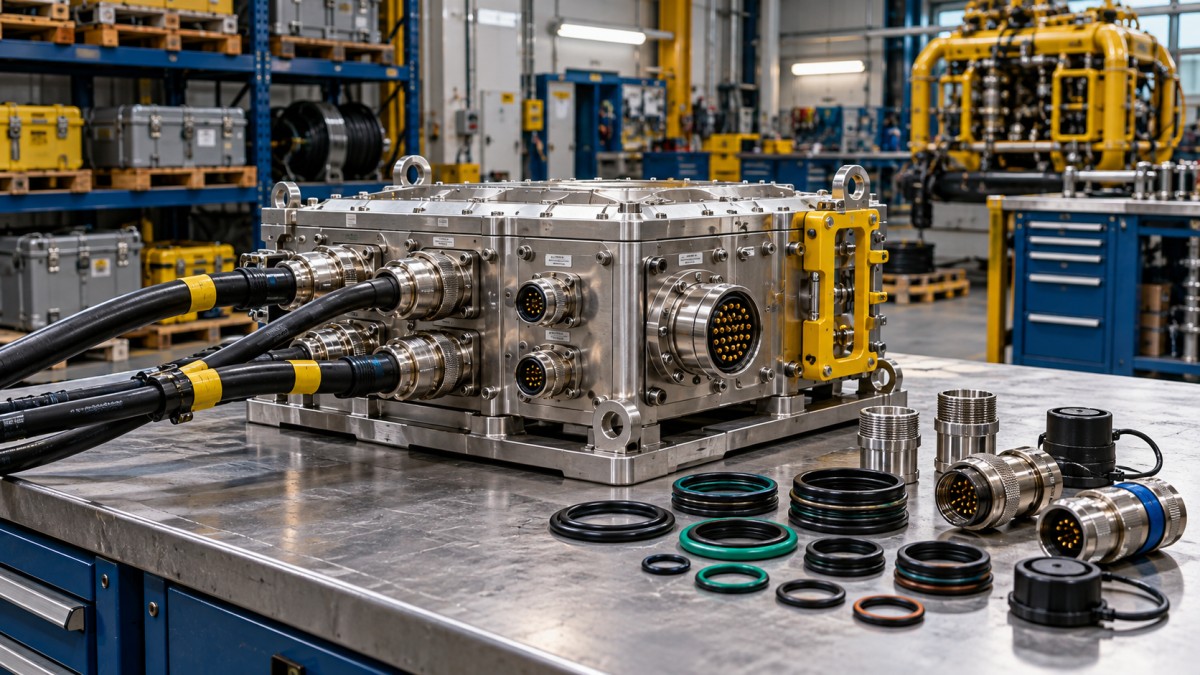
Prioritize dependencies by consequence rather than by inventory value. Equipment that has no practical substitute, supports a safety function or requires a difficult offshore intervention deserves closer attention than a readily replaceable item. Include environmental consequences where a failure could affect containment, discharge or recovery operations.
What can a successor or independent provider actually deliver?
A successor is often the most direct route to continuity, but the purchase of a business or product line does not automatically settle every obligation. Ask for written confirmation of the equipment covered, available services, parts ownership, documentation rights and any limits on warranties. Check whether support is available in the asset’s operating region and whether field personnel can mobilize when needed.
Independent service providers can be a viable alternative for inspection, repair, refurbishment or manufacture of certain components. The assessment should go beyond a general statement of capability. Ask which work the provider performs itself, what it subcontracts, which revisions it has experience with and how it verifies the finished item. Evidence might include relevant procedures, traceability records, test results and references that can be checked with permission.
There is a difference between producing a dimensionally similar part and demonstrating that it is fit for duty. Material properties, corrosion exposure, fatigue loading, electrical protection and operating limits may all matter. For lifting equipment, pressure-containing components or safety-related controls, the review may also involve the asset owner’s engineering authority, insurer, classification society or regulator, depending on the installation and jurisdiction.
A service provider’s credentials alone do not establish that a specific repair or substitute is acceptable. The scope of any approval, the equipment configuration and the applicable local requirements must be checked for the work being proposed.
Protect the information, not just the hardware
Documentation gaps often become visible only after support has disappeared. Retrieve the latest available drawings, bills of materials, operating manuals, inspection records, certificates, software backups and change histories. Compare them with the as-installed equipment: commissioning changes and later repairs are not always reflected in the original package.
Ownership of equipment does not necessarily confer ownership of source code, design files or unrestricted rights to reproduce components. License terms, intellectual property rights, confidentiality provisions and insolvency arrangements can affect what an operator or replacement provider may use. Legal review is particularly important before copying software, sharing protected drawings or commissioning a third party to manufacture proprietary parts.
Software continuity also has an operational side. Establish whether licenses expire, whether activation depends on a supplier server and whether a local backup can be restored. Test recovery in a controlled environment where practicable; a backup file is not proof that a system can be rebuilt. Any change to access credentials or remote connectivity should follow the asset’s cybersecurity and change-control procedures.
For new contracts, consider agreed access to documentation and configuration data, continuity of licenses, notice of product discontinuation and arrangements for transfer or escrow where appropriate. The wording needs to identify what is delivered, when access is triggered and whether the receiving party has the rights and technical means to use it.
Deciding between stockholding, refurbishment and replacement
A last-time purchase can buy time, especially for long-lead components, but it is not a complete obsolescence strategy. Stock may have shelf-life, storage, preservation or periodic test requirements. Electronic parts can become unusable if associated software or repair capability disappears. Before placing an order, verify the installed revisions and decide who will inspect, store and manage the inventory.
Refurbishment can extend useful life when the condition of the equipment is understood and the necessary procedures are available. It is less attractive when hidden damage cannot be assessed, replacement materials are uncertain or repeated offshore removals dominate the cost. The decision should include the full intervention: preparation, lifting, transport, workshop capacity, testing, reinstallation and the possibility of a missed weather window.
Replacement may remove one dependency while creating others. A new unit might require changes to foundations, power supply, controls, communications, lifting arrangements or crew training. On a vessel, the replacement must also fit the available deck space and operating envelope. On a fixed asset, maintenance access and the time required to isolate and recommission the system may be decisive.
Compare options over the remaining intended life of the asset, including engineering, procurement, testing, mobilization, downtime, insurance and disposal where relevant. Use project-specific assumptions rather than treating the lowest purchase price as the lowest-cost solution.
A practical response when an exit is announced
Procurement, engineering and operations should work from the same verified picture. An announcement that a company is leaving a market is a warning, not proof that every service has stopped. Confirm the status with the supplier, appointed administrator or named successor, and keep a dated record of what each party has actually committed to deliver.
- Identify affected equipment and upcoming maintenance, inspection and project milestones.
- Confirm the status of outstanding orders, warranties, service agreements, software access and technical queries.
- Check critical stock against installed revisions, preservation requirements and realistic replenishment routes.
- Secure available records and identify gaps that require supplier input while knowledgeable personnel remain accessible.
- Assess alternative providers and replacement options through the relevant engineering and approval process.
- Assign owners and review dates for unresolved risks, including decisions that must be made before the next offshore campaign.
The proposed OffshoreWire portal’s focus on project delivery and supply-chain context reflects a useful principle here: a supplier announcement, a signed transfer of support and a demonstrated service capability are different stages of evidence. Teams should track each separately. Before the next maintenance window, the most useful question is not simply whether a replacement supplier exists, but whether the required part, information, approvals and personnel can reach the asset in time.
- Last One:No more articles
- Next Article:No more articles
Tag
Recommended for You
{item.title}
News Categories
Leave Us a Message